
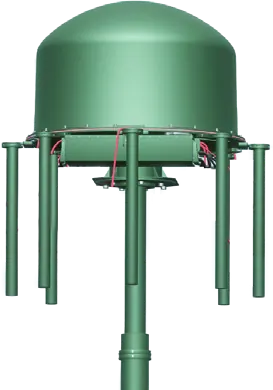
RFDD
RF-Based Drone Detector
Scans 70 MHz to 12 GHz for UAV RF emissions and determines the direction and source of a detected signal.

A multi-layer, multi-sensor counter-UAS system that detects, tracks, identifies and neutralises unmanned aerial threats, from a single drone to a swarm.
RF sensors identify active drone communications while X-band radar detects non-emitting or silent aircraft, so a target that goes quiet is not lost. Day and night cameras confirm it visually and track it automatically. The system then jams the control link and GNSS, or cues guns, RCWS and interceptors for kinetic engagement, with every sensor resolved into one operational picture.
Stated ranges, drawn on one scale. The layers are not a claim of simultaneous coverage.
Six components on one modular architecture, configured to the site and the threat.
RFDD
Scans 70 MHz to 12 GHz for UAV RF emissions and determines the direction and source of a detected signal.
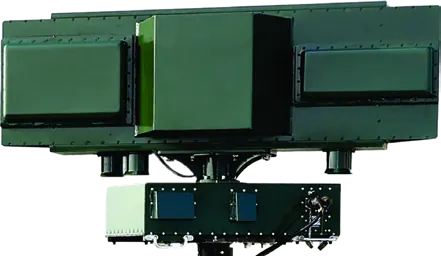
Radar
Detects and tracks non-emitting UAVs, providing range, azimuth and elevation on targets that carry no radio link to intercept.
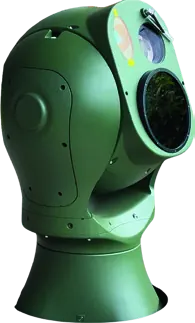
EO/IR
Provides visual confirmation of a detected threat and tracks cued targets automatically, day or night.
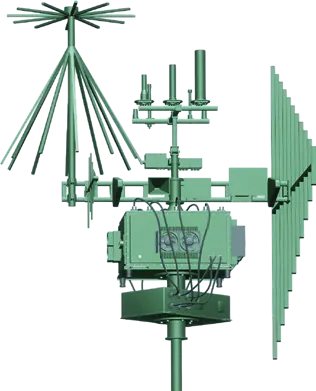
DRFJ
Automatically jams detected frequencies across ISM bands, non-ISM bands and GNSS.
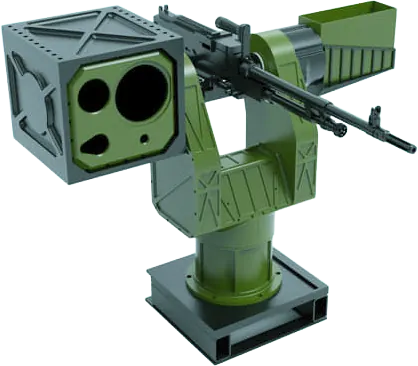
Effectors
The architecture cues guns, RCWS and interceptors, aligning the effector with the drone flight path. L70 integration and net capture are supported.

DFCC
Fuses RFDD, radar and EO/IR into one operational picture, displaying target tracks, threat zones and spectrum, and initiating either response.

One modular architecture, configured to the mission and the site.
Complete technical detail for the system and all six components, delivered to WhatsApp or email.